In just a few days Nasa is planning to launch the Artemis II mission, sending four astronauts on their way to the Moon.
Their voyage around our nearest neighbour will pave the way for a lunar landing and, eventually, a Moon base.
Nasa's Artemis programme has taken years of work, involved thousands of people and is estimated to have cost $93bn to date.
But for some, there's a distinct feeling of "been there, done that".
More than 50 years ago, America's Apollo missions made history when the first people set foot on the lunar surface. With six landings in total, it felt like the Moon had been well and truly ticked off the space to-do list.
So why is the US spending so much time, effort and money racing to return?
Valuable resources

The terrain might look dry, dusty and seems rather barren, but it's far from that.
"The Moon has got the same elements in it that we have here on Earth," says Prof Sara Russell, a planetary scientist at the Natural History Museum.
"An example is rare earth elements, which are very scarce on Earth, and there might be parts of the Moon where these are concentrated enough to be able to mine them."
There are metals too, like iron and titanium, and also helium, which is used in everything from superconductors to medical equipment.
But the resource that's the biggest draw is the most surprising: water.
"It has water trapped in some of its minerals, and it also has substantial amounts of water at the poles," says Russell.
There are craters that are permanently in shadow, she says, where ice can build up.
Having access to water is vital if you want to live on the Moon. It not only provides drinking water, but can also be split into hydrogen and oxygen to provide air for astronauts to breathe, and even fuel for spacecraft.
Race for space dominance

America's Apollo missions of the 1960s and 1970s were driven by a race for space dominance with the Soviet Union. This time around China is the competition.
China has been making fast progress with its space programme. It's successfully landed robots and rovers on the Moon, and says it will get humans there by 2030.
There's still prestige in being the first to plant your flag in the lunar dust. But now it really matters where you plant it.
Both the US and China want access to the areas with the most abundant resources, which means securing the best lunar real estate.

The United Nations 1967 Outer Space Treaty says that no country can own the Moon. But when it comes to what's found on the Moon, it's not quite so straightforward.
"Although you can't own a piece of the land because of the UN treaty, you can basically operate on that land without anybody interfering with it," says Dr Helen Sharman, the first British astronaut.
"So the big thing right now is to try to grab your piece of land. You can't own it, but you can use it. And once you're there, you've got it for as long as you want it."
Paving the way to Mars

Nasa has its sights set on Mars and wants to send people there by the 2030s.
Given the technological hurdles it needs to overcome, it's a pretty ambitious timeline.
But you have to start somewhere, and the US has decided the Moon is that place.
"Going to the Moon and staying there for a sustained period is much safer, much cheaper and much easier to be a test bed for learning how to live and work on another planet," says Libby Jackson, head of space at the Science Museum.
On a Moon base, Nasa can perfect the tech to provide the air and water astronauts need. They'll have to work out how to generate power and build habitats to protect people from extreme temperatures as well as dangerous space radiation.
"These are all technologies that if you try them for the first time on Mars and they go wrong, it's potentially catastrophic. It's much safer and much easier to try them out on the Moon," Jackson says.
Mysteries yet to be unlocked

Scientists can't wait to get their (gloved) hands on material from the Moon.
The rocks brought home by the Apollo astronauts transformed our understanding of our celestial neighbour.
"They told us that the Moon was formed by this incredibly dramatic event, where a Mars-sized body smashed into the Earth and the bits that came off formed the Moon. We know about that because of the Apollo rocks," says Prof Sara Russell.
But she says there is still much to discover.
Because the Moon was once a part of the Earth, it holds a record of 4.5bn years of our own planet's history. And with no plate tectonics, or wind and rain to wipe this record away, the Moon is a perfect time capsule.
"The Moon is a fantastic archive of the Earth," says Russell. "A new haul of rocks from a different area of the Moon would be amazing."
Inspiring a new generation

The grainy black-and-white footage beamed back from the Apollo missions transformed the dream of space into a reality.
And while only a lucky few watching would become astronauts themselves, many went on to careers in science, technology and engineering.

It's hoped that the Artemis missions - streamed live and in 4k - will inspire a new generation.
"We live in a world of technology. We need scientists, engineers and mathematicians - and space has a brilliant ability to excite people about those subjects," says Libby Jackson.
New jobs and a thriving space economy will give the US a return on the billions of dollars it's poured into Artemis. As will any spin-offs from the technology developed for the missions that have a use on Earth.
But Helen Sharman says a return to the Moon will also give the world a much-needed boost.
"If we really come together, we can produce so much that's beneficial to humankind," says Sharman.
"It shows us what humans are capable of."
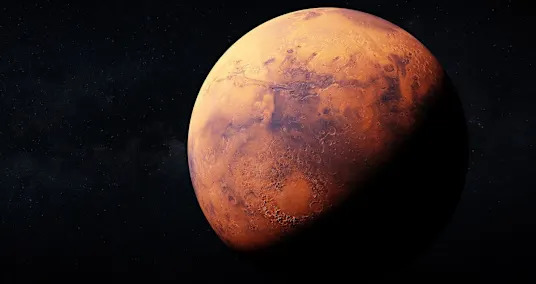
Top image shows a digital illustration of the surface of Mars.
LATEST POSTS
- 1
 Scientists have found an alarming environmental impact of vast data centers
 - 2What's The Friendliest City In The United Kingdom?
- 3Collection of 7,000-year-old ostrich eggs discovered under sand dunes in southern Israel
- 4Bestselling author Colleen Hoover reveals cancer journey
- 5Vote in favor of Your #1 Home Exercise Gear: Execution and Comfort Matter



- Don’t let food poisoning crash your Thanksgiving dinner
- Archaeologists uncover details about the Hjortspring boat's origins
- Vacuum Cleaners That Are Not difficult To Use For Home
- How did Ariana Grande get her Glinda voice? I’m the man behind the magic.
- It's your last chance to subscribe to Paramount+ before they raise their prices: Here's how to lock in current pricing
- Instructions to Decide whether a Fender bender Legal counselor is Required for Your Particular Case
- Damaged launch pad: How long before Russia can send astronauts to the ISS again?
- The most effective method to Plan an Incineration Administration: A Bit by bit Guide.
- The 12 biggest space stories of 2025 — according to you