When you buy through links on our articles, Future and its syndication partners may earn a commission.

You can tune in to see live views of the Geminid meteor shower as it peaks overnight on Dec. 13-14, thanks to a free livestream hosted by the Virtual Telescope Project. The annual shower occurs as Earth passes through the debris-strewn orbit of the wandering asteroid (3200) Phaethon.
The livestream is scheduled to start at 4 p.m. EST (2100 GMT) on Dec. 13 on The Virtual Telescope Project's YouTube channel, weather permitting. Under perfect dark-sky conditions, you could see up to 150 meteors per hour near the peak, although most viewers will see fewer, especially from light-polluted areas.
If clouds conspire to ruin your view — or if you live in the southern hemisphere, where the shower isn't visible at all — the Virtual Telescope Project's Livestream will help ensure that you won't miss out on one of the most impressive natural light shows of the year.
The stream is set to run until dawn and will feature views from the organization's super-wide-angle all-sky camera located in Manciano, Italy, which, according to Virtual Telescope Project founder Gianluca Masi, is one of the darkest sky regions in the country.
How to look for Geminids
Look for Geminid meteors streaking away from a point of origin close to the bright star Castor in the constellation Gemini, which rises above the eastern horizon a few hours after sunset and remains visible throughout the night. As such, Geminid shooting stars can be spotted from mid-evening until dawn. Moonlight shouldn't spoil the show too badly this year, though a 26%-lit waning crescent moon rises an hour or two after midnight, which may make viewing slightly more challenging in the hours preceding sunrise.
Shooting stars become visible when particles shed by wandering comets or asteroids impact Earth's atmosphere and vaporize in brief flashes of light., If you're hoping to capture a photo of a meteor yourself, check out our guide to photographing shooting stars, along with our picks of the best cameras and lenses for imaging the night sky.
Editor's Note: If you capture a shooting star and want to share your astrophotography with Space.com's readers, then please send your photo(s), comments, name and location to [email protected].
LATEST POSTS
- 1
 Australia Cracks Down on Gambling Ads as Prediction Markets Like Polymarket Remain Blocked
 - 2Kremlin: Russian troops conquer Pokrovsk after year of intense combat
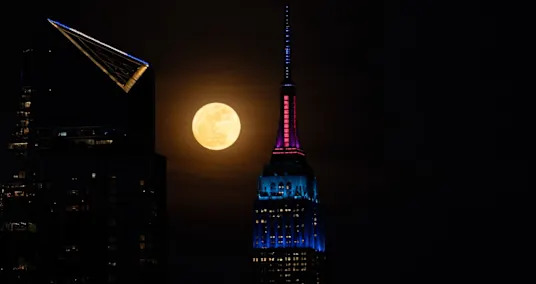
- 3April full moon 2026 dazzles as 'Pink Moon' lights up skies worldwide (photos)
- 4Judge approves Purdue Pharma’s new $7B opioid settlement with the Sacklers
- 5Sea level doesn’t rise at the same rate everywhere – we mapped where Antarctica’s ice melt would have the biggest impact



- South Africa pushes for $200B investment
- Whale stranded off Germany for days free again
- Rick Steves Recommends This German Town's Castle Hotel With Rhine River Views
- The Longest Underwater Tunnel Connecting Germany and Denmark
- Scientists document a death from a meat allergy tied to certain ticks
- Inside The Design-Forward Wellness Hotel Marking A New Chapter In Medellín
- America's Confided in Cooler in 2024
- Senegal president signs tough new anti-LGBT law doubling jail terms
- Struggling to keep your New Year's resolutions? Here's how to keep yourself on track