When you buy through links on our articles, Future and its syndication partners may earn a commission.

SpaceX will launch an advanced ocean-mapping satellite from California early Monday morning (Nov. 17), and you can watch the action live.
The Sentinel-6B spacecraft is scheduled to lift off atop a Falcon 9 rocket from Vandenberg Space Force Base on Monday at 12:21 a.m. EDT (0521 GMT; 9:21 p.m. on Nov. 16 local California time).
You can watch the launch live here at Space.com courtesy of NASA, or directly via the space agency. Coverage will begin at 11:30 p.m. EDT on Sunday (Nov. 16; 0430 GMT on Nov. 17).

Sentinel-6B is part of the European Union's Copernicus Earth-observing program. The new satellite will measure sea surface heights around the globe with great accuracy, continuing the work of its predecessor, Sentinel 6 Michael Frelich, which launched atop a Falcon 9 in November 2020.
"Monitoring sea-level rise is high on the global agenda," European Space Agency (ESA) officials wrote in a Sentinel-6B mission description.
"In the past 25 years, the average height of the world's oceans has risen by almost 10 cm [4 inches], according to data from Copernicus," they added. "The Copernicus Sentinel-6 mission has become the gold standard reference mission to monitor and record this key consequence of climate change."
Sentinel-6B will do this work using a radar altimeter instrument developed by ESA. The satellite also carries a NASA-provided microwave radiometer, which will determine atmospheric water content, allowing for more accurate interpretation of the altimeter's results.
During its first year of observations, Sentinel-6B will work with Sentinel 6 Michael Frelich, "enabling greater accuracy with precise cross-calibration between the two instruments," ESA officials wrote about the mission, which is a collaboration among the European Commission, ESA, NASA, Eumetsat, and the U.S. National Oceanic and Atmospheric Administration, with support from the French space agency CNES.
If all goes according to plan on Monday morning, the Falcon 9's upper stage will deploy Sentinel-6B about 57 minutes after liftoff. The 3,175-pound (1,440 kilograms) satellite will then make its way to its science orbit, which lies 830 miles (1,336 kilometers) above Earth.
The Falcon 9's first stage, meanwhile, will come back to Vandenberg for a landing about nine minutes after liftoff. It will be the third flight for this particular booster; its previous two missions lofted batches of SpaceX's Starlink broadband satellites, according to the company.
LATEST POSTS
- 1
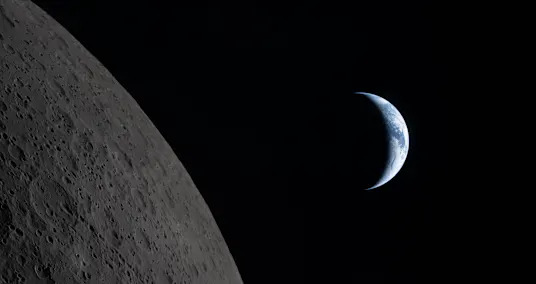
 NASA releases stunning new images captured by the Artemis II moon mission, including 'Earthset' and a solar eclipse from space
 - 2One month of war on Iran cost Arab countries up to $194bn: UNDP
- 3What's your biological age? Experts explain the benefits and risks of at-home tests
- 4Photos: Hundreds Gather at Bondi Beach After Deadly Attack
- 5Instructions to Pick the Best Course for Your Next Waterway Voyage: Objections, Views, and Social Encounters




- UK consumer confidence plunges amid escalating Iran conflict
- Find the Advantages of Innovative Leisure activities: Supporting Creative mind and Self-Articulation
- What happened to Eleven after the ambiguous 'Stranger Things' series finale? Millie Bobby Brown knows — but 'swore herself to secrecy'
- Day to day Temporary Positions That Compensate Fairly in the US
- The most effective method to Quick Track Your Outcome in Advanced Showcasing with a Web-based Degree
- Journey Travel Objections for Your Next Experience
- Tech Devices 2023: The Most blazing Arrivals of the Year
- Israeli forces kill one person in series of attacks on southern Lebanon
- Journey through Pages: A Survey of \Plunging into Scholarly Universes\